18. September, 2025
Forex Trading Fundamentals: How to Master Swing and Day Trades
Every day, over $7.5 trillion changes hands in the foreign exchange market. To put this in perspective, that’s more money than the GDP of most countries traded in a single day. This massive liquidity pool creates opportunities that exist nowhere else in the financial world.
Yet despite this enormous opportunity, studies show that 80% of forex traders lose money. Why? It’s not because the market is rigged or because successful trading is impossible. It’s because most traders approach forex without proper education, realistic expectations, or systematic methods.
Understanding Currency Pairs and Market Dynamics
The forex market trades over $7.5 trillion daily – that’s more than the entire crypto market cap on most days. This massive liquidity pool creates opportunities that dwarf what most crypto traders ever see.
The Big Three: Major, Minor, and Exotic Pairs
Not all currency pairs are created equal. The forex world divides into three distinct categories, each with its own personality and profit potential.
Major pairs dominate the action – EUR/USD alone accounts for about 24% of all forex trading. These pairs include the heavy hitters: EUR/USD, GBP/USD, USD/JPY, USD/CHF, USD/CAD, AUD/USD, and NZD/USD. Think of them as the Bitcoin and Ethereum of forex – high liquidity, tight spreads, and predictable behavior patterns.
Minor pairs (or crosses) exclude the US Dollar but pair other major currencies. EUR/GBP, GBP/JPY, and AUD/JPY fall into this category. These pairs often move with more volatility than majors, creating swing trading opportunities that smart traders exploit.
Exotic pairs combine a major currency with one from a developing economy. USD/TRY (Turkish Lira) or EUR/ZAR (South African Rand) represent this category. The spreads are wider, but the moves can be dramatic – perfect for swing traders who understand the underlying economic stories.
Market Sessions That Never Sleep
Unlike crypto’s true 24/7 nature, forex operates on a 24/5 schedule across four major sessions. The Asian session kicks off in Sydney, moves through Tokyo, then transitions to London (the most active), and finally closes in New York. Each session has its own character – Asian markets tend to be range-bound, London brings volatility, and New York often sees trend continuation or reversal.
The overlap periods are where the magic happens. When London and New York sessions overlap, that’s when you see the biggest moves. Major economic announcements during these windows can create the kind of volatility that swing traders dream about.
What are Pips, Spreads, and Leverage?
A pip represents the smallest price movement in a currency pair – typically the fourth decimal place. For EUR/USD, a move from 1.2050 to 1.2051 equals one pip. This might seem tiny, but with proper position sizing, pips add up quickly.
The spread – the difference between bid and ask prices – represents your immediate cost. Major pairs typically have spreads of 1-3 pips, while exotics can stretch to 10-50 pips. This cost structure fundamentally changes how you approach different trading styles.
Leverage in forex often reaches 50:1 or higher, meaning you can control $50,000 with just $1,000. This amplifies both profits and losses dramatically. Unlike crypto, where you typically buy and hold actual assets, forex traders commonly use this leverage to maximize their market exposure.
The market’s immense size means it responds to macroeconomic factors rather than social media sentiment or whale movements. Understanding these fundamentals sets the foundation for everything that follows.
Why Swing Trading Actually Works for Real People
With swing trading, you hold positions for days or weeks instead of minutes or hours. While day traders are scrambling for 10-pip profits, swing traders calmly collect 100-200 pips from a single trade.
The numbers tell the story:
- Day traders: 5-20 pips per trade, 10-50 trades per day
- Swing traders: 50-200 pips per trade, 1-5 trades per week
Which sounds more appealing to you?
You can actually have a life. Check your trades in the morning with coffee, maybe again after dinner. That’s it. No missing important meetings because “the market is moving.” No trading while your family wonders where you’ve gone mentally.
Reading the Market Like a Swing Trader
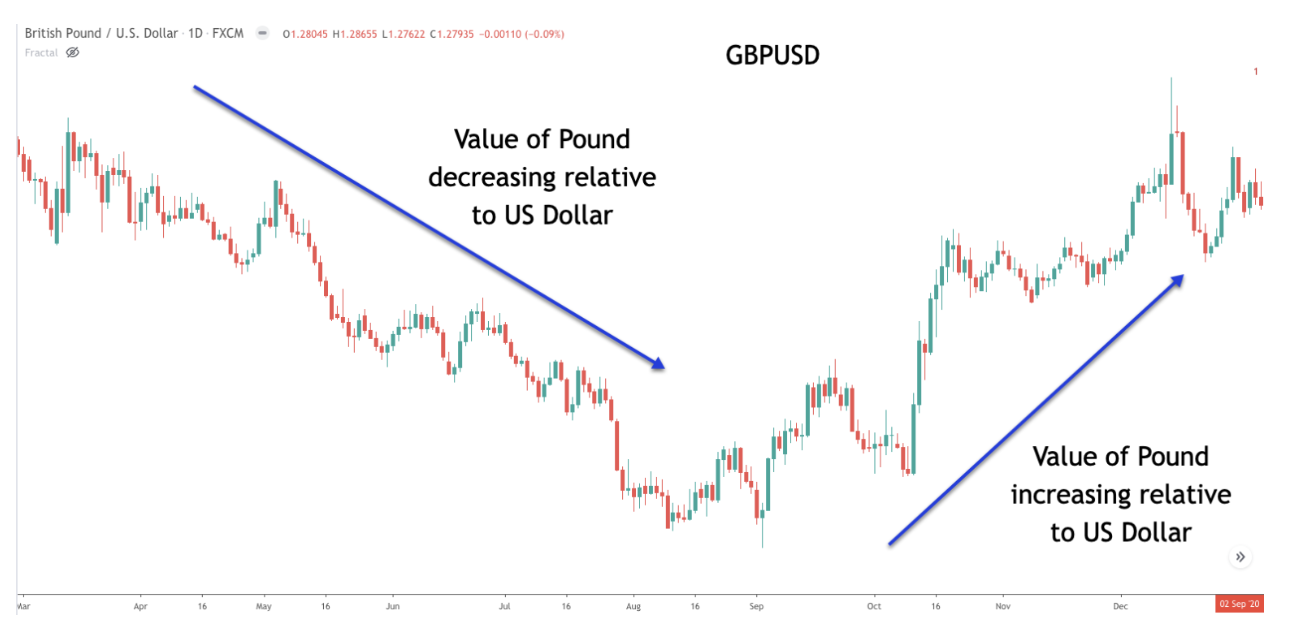
Forget those crazy 1-minute charts that look like seismograph readings during an earthquake. Swing traders work with daily and 4-hour charts – clean, clear, and actually readable. When EUR/USD has been trending up for two weeks, that’s information you can actually use. When it bounces off a major support level for the third time, that’s a signal worth paying attention to.
Your swing trading toolkit:
- Moving averages: The 20, 50, and 200-day lines act like guardrails for price
- Support and resistance: Key levels that currencies respect over and over
- Chart patterns: Triangles, channels, and breakouts that take days to develop
Smart Risk Management (Without the Stress)
Day traders have to babysit every trade because things can go wrong in seconds. Swing traders? We set our stops, targets, and walk away. The market does the work while we live our lives.
Here’s how the math works:
- Day trading: Risk 10 pips to make 10 pips (1:1 ratio)
- Swing trading: Risk 50 pips to make 150 pips (1:3 ratio)
See the difference? Swing traders can be wrong twice as often as day traders and still make more money. That’s the power of better risk-reward ratios.
Setting up a swing trade:
- Identify your entry level
- Find where you’re wrong (stop-loss)
- Target where the move is likely to end
- Make sure the potential profit is at least twice the risk
The psychological advantage is huge. When you know you can be wrong 60% of the time and still profit, trading becomes much less stressful. You’re not sweating every pip movement or second-guessing every decision.
Why Patience Pays (Literally)
The hardest part about swing trading has nothing to do with technical analysis or risk management. It’s learning to be patient in a world that rewards instant gratification.
We’re conditioned to think that more activity equals better results. In trading, the opposite is often true. The best swing traders I know make fewer trades but bigger profits per trade.
The currency markets naturally move in trends that last days or weeks. Swing trading simply aligns with this natural rhythm instead of fighting against it. You’re working with the market’s natural flow rather than trying to outsmart every tiny fluctuation.
Most importantly, swing trading gives you something day trading never can: perspective. When you’re not drowning in minute-by-minute noise, you can actually see the bigger picture. You become a better trader because you’re seeing what actually matters.
The result? More profit, less stress, and a trading approach that actually fits into a normal human life.
Day Trading – Capitalizing on Intraday Movements
Day trading forex means opening and closing currency positions within the same trading day, typically within hours, minutes, or even seconds. Unlike swing traders who can afford to wait days for their thesis to play out, day traders live in the moment, making split-second decisions based on price action, news releases, and market momentum.
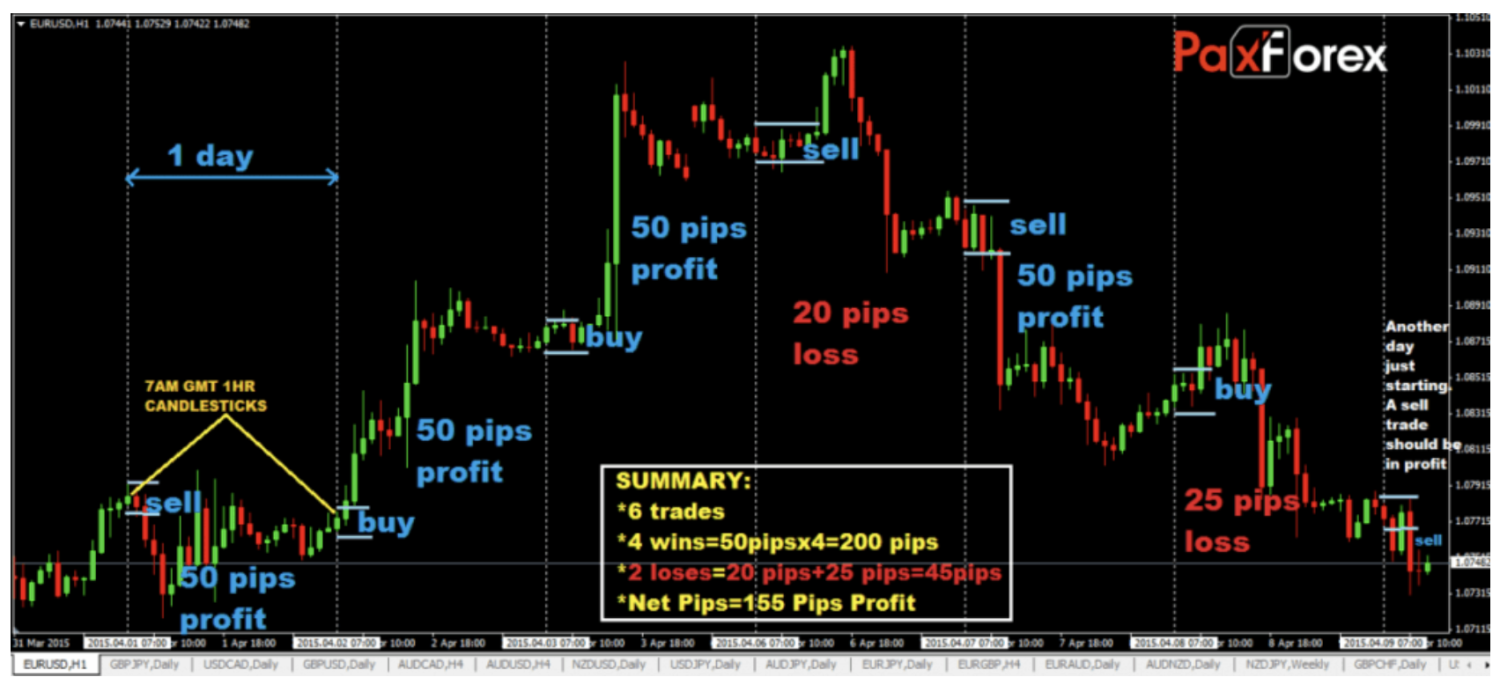
An Illustration of Forex Day Trading Mindset. Image Source: PayForex
The Day Trading Mindset
The best day trading strategy requires a completely different psychological approach than any other trading style. You need the focus of a surgeon and the emotional control of a poker player.
The most successful day traders follow strict rules about position sizing, never risk more than 1-2% of their account on a single trade, and accept that losses are simply the cost of doing business.
What separates profitable day traders from the 80% who lose money? Discipline. The key difference between forex day trading and crypto trading lies in the timeframes and market behavior. Forex markets are more predictable during certain sessions, with clear patterns emerging during London-New York overlaps or major economic releases.
Essential Day Trading Strategies
- Scalping: The Art of Small Wins
Scalping involves making dozens of trades per day, capturing tiny price movements of 2-5 pips at a time. Scalpers typically use 1-minute to 5-minute charts and rely heavily on technical indicators like RSI, MACD, and Bollinger Bands.
The math is simple: if you can consistently capture 3-5 pips per trade with proper position sizing, those small wins compound quickly. However, scalping requires intense concentration and lightning-fast execution. One slow internet connection or moment of distraction can turn a profitable day into a disaster.
- Breakout Trading During Session Overlaps
The most volatile—and profitable—times for forex day trading occur when major trading sessions overlap. The London-New York overlap (8 AM to 12 PM EST) often produces the strongest trending moves, especially in EUR/USD and GBP/USD.
Breakout traders identify key support and resistance levels during quieter Asian sessions, then position themselves for explosive moves when European or American traders enter the market. The strategy works because increased volume often leads to sustained directional moves.
- News Trading
Major economic releases—non-farm payrolls, central bank meetings, GDP announcements—can move currency pairs 50-100 pips in minutes. News traders position themselves before these releases or trade the immediate aftermath.
The challenge with news trading lies in execution speed and managing slippage. Professional day traders often use multiple brokers and dedicated news terminals to gain even millisecond advantages over retail competitors.
Tools and Timeframes for Day Traders
- Chart Timeframes That Matter
Day traders primarily use 1-minute, 5-minute, and 15-minute charts for trade execution, while relying on hourly charts for overall market context. The key is understanding how price action flows between timeframes—what looks like a reversal on the 1-minute chart might just be a minor pullback on the 15-minute view.
Most successful day traders use a top-down approach: analyze the daily chart for overall trend direction, use the hourly chart to identify key levels, then drop to lower timeframes for precise entry and exit points.
- Technical Indicators for Fast Markets
Simple indicators often work best. Moving averages help identify trend direction, while RSI and Stochastic oscillators signal overbought/oversold conditions. Many professional day traders rely on price action alone, using candlestick patterns and support/resistance levels without any indicators at all.
The most important tool for day traders? A reliable internet connection and backup systems. Technical analysis means nothing if you cannot execute trades when opportunities arise.
- Platform Requirements for Speed
Forex trading platforms like MetaTrader 4/5, cTrader, or specialized forex platforms offer the speed and functionality necessary for serious day trading. Features like pre-set position sizes, automated stop-losses, and hotkey trading can mean the difference between profitable trades and missed opportunities in fast-moving markets.
Managing Risk in Fast Markets
What is the biggest killer of day trading accounts? Poor risk management combined with emotional decision-making. The 2% rule exists for a reason—never risk more than 2% of your trading capital on any single trade, regardless of how “sure” you feel about the setup.
Position sizing becomes critical when making multiple trades per day. If you risk 2% per trade and make 10 trades, you could theoretically lose 20% of your account in a single session. Most successful day traders risk 0.5-1% per trade to account for multiple positions.
Stop losses must be non-negotiable in day trading. Set your stop-loss before entering the trade and stick to it, no matter what your emotions tell you.
Some days you will lose money despite perfect analysis. Market conditions change, unexpected news hits, or you simply have an off day. The goal is not to win every trade but to maintain positive expectancy over hundreds of trades.